

Buying salon furniture
Salon furniture needs to work hard from the first client to the last clean-up of the day. Before you order, test the basics properly so you do not end up with chairs, trolleys or basins that look right but slow the team down.
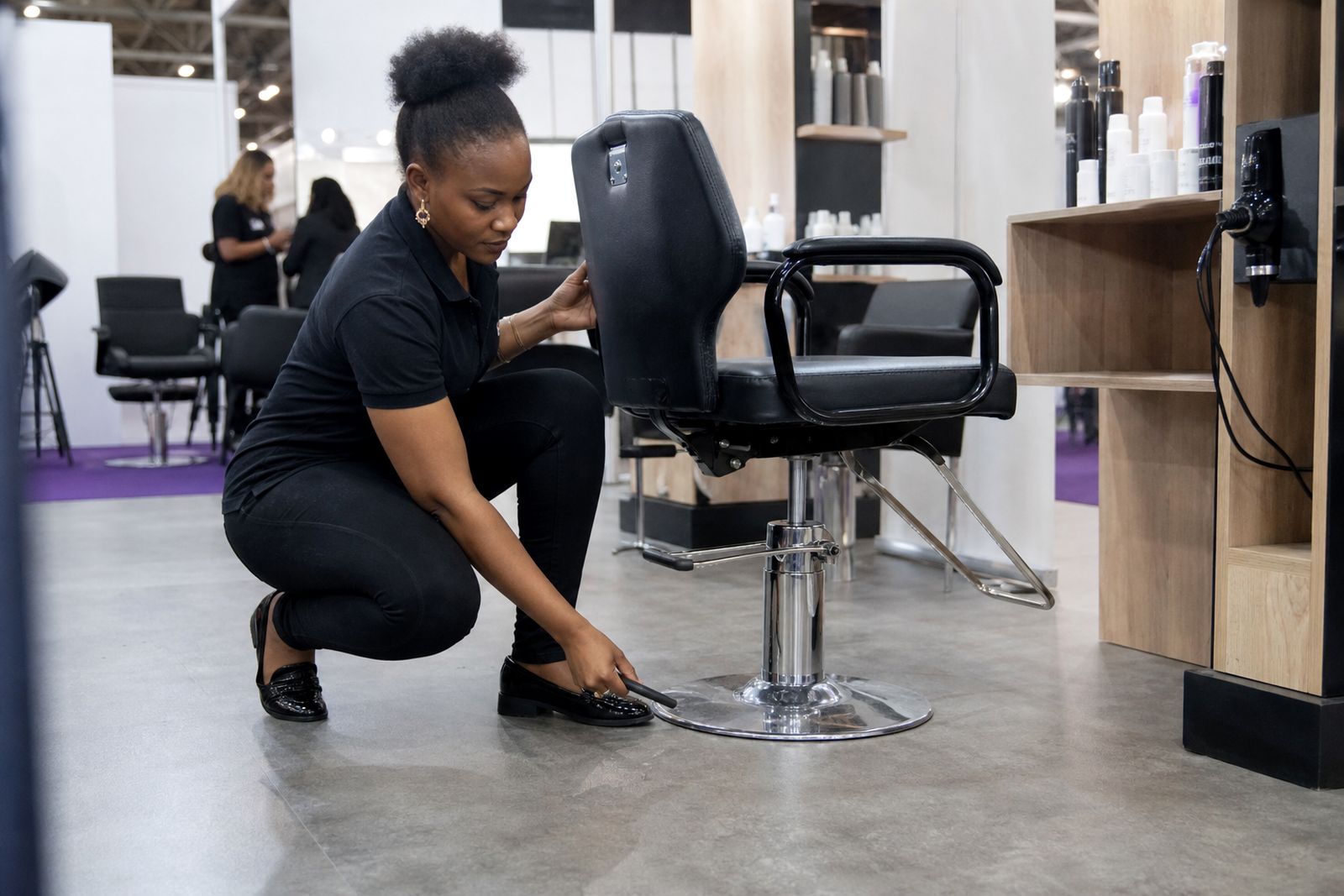
Start with the services you actually offer
Before comparing salon chairs, wash units, stools or reception seating, write down the services done most often in your space. A hair salon with frequent colour work needs different layouts and wipe-clean surfaces from a nail studio focused on compact stations. A spa treatment room needs quieter movement, softer finishes and enough space around the bed or chair for the therapist to work without twisting.
Measure how many clients can be served at once, how long each service usually takes and where products, towels and tools need to sit during treatment. This helps you avoid buying furniture that suits a brochure but not your floor. In Gauteng, many salon premises are in busy centres or mixed-use blocks, so every square metre counts.
- List your top services by frequency, not by what you plan to add later.
- Note where water, power points and plumbing already sit.
- Check whether staff stand, perch or sit during the service.
- Allow walking room for clients with bags, coats or prams.
- Think about busy Saturdays when every station is in use.
Test comfort for both the client and the operator
Comfort is not only about padding. The height range, seat width, back support and foot placement all matter. Ask to sit in the chair for more than a minute. If possible, have an operator mimic a real service position beside it. A styling chair can feel fine to a client but still force the operator to hunch over for cutting, blow-drying or lash work.
For wash areas, check neck support carefully. A basin that catches the neck at the wrong angle will be noticed after the second shampoo of the day. For nail and beauty stations, test arm support and leg room. If the operator keeps knocking knees or moving the stool around to find space, the setup is not right.
- Check hydraulic or height adjustment through its full range.
- Test whether the base stays stable when a client shifts weight.
- Make sure footrests do not wobble or sit too high.
- Confirm stools roll smoothly but do not drift on level floors.
- For treatment rooms, check how easily the furniture reclines and returns to position.
Measure the room twice, then check movement space
Published dimensions can be misleading if they only show the furniture footprint and not the full working area. A wash unit may fit against the wall, but the chair needs recline space and the operator needs room behind or beside the basin. A manicure setup may fit on paper, but drawer opening and client seating can block the passage.
Take your own tape measure to any show stand and compare the dimensions with your floor plan. Mark out the footprint at your salon with masking tape before ordering. This simple step shows very quickly whether traffic flow will work on a normal day and during peak periods. Also check door widths, passages, lifts and stairwells for delivery. Some shopping centre units in Johannesburg and Pretoria have strict access times and loading rules, so ask your landlord or centre management before finalising.
- Leave room for trolley parking without blocking exits.
- Allow cleaning access behind units where dust and hair collect.
- Check whether drawers and cabinet doors can open fully.
- Plan waiting seating so clients are not in the service path.
- Measure delivery routes from the loading bay to your unit.
Look closely at surfaces, joints and cleaning points
Furniture in a salon or spa gets wiped often and exposed to colour, acetone, oils, creams and hot tools. Ask what the seat covering, worktop and side panels are made from, and how they should be cleaned. A finish that marks easily or traps product around seams will age fast. In drier inland conditions dust shows quickly, while in more humid treatment areas poorly sealed edges can start lifting sooner than expected.
Inspect stitching, welded joints, castors, hinges and drawer runners. Pull drawers out fully and push them back in several times. Check for gaps where hair, cotton wool or product residue can gather. At wash stations and spa rooms, look for areas where water can splash and sit. If a base panel or cupboard edge is hard to wipe, it will stay dirty no matter how careful the team is.
Good practice also means choosing surfaces that can be cleaned between clients without special fuss. If the supplier recommends a complicated process every time, the routine probably will not last in a busy salon.
Check power, plumbing and practical backup plans
Some salon furniture is simple and manual. Other pieces need pumps, motors, lighting or nearby sockets. Before ordering, confirm the power requirements and where the cable runs. In Gauteng, power cuts can interrupt a full trading day, so think about whether the unit can still be used safely in a manual position or whether it stops service completely.
For wash units and any plumbing-linked furniture, ask what connections are required and who must complete the installation. Waste outlets, water pressure and floor levels affect day-to-day use more than most first-time buyers expect. If your premises are in a sectional scheme or centre, there may also be rules on plumbing changes, noise and after-hours work.
- Ask whether the item needs dedicated power or a normal plug point.
- Check cable length and where the switch sits.
- Confirm plumbing points before any drilling or chasing starts.
- Find out whether installation must be done by the supplier or your contractor.
- Ask what happens if a motor, pump or fitting fails during a busy week.
Ask about lead times, repairs and repeat orders
The best furniture choice is one you can maintain and match later. If you plan to add stations over time, ask whether the same finish, colour and dimensions will still be available when you place a repeat order. Small differences in height or upholstery shade can make a salon look patchy even if each item is fine on its own.
Also ask who handles snag lists, damaged deliveries and replacement parts. A salon chair out of action for a week is not a small issue when your floor is full. Get clear on lead times for common spares such as pumps, castors, footrests and basin fittings. Ask what the delivery includes, whether packaging removal is part of the service and who checks the goods on arrival.
At a trade show, take photos of labels, hinges, undersides and adjustment points, not only front views. Those details help you compare products properly afterwards. If you want to meet suppliers face to face and test units in person, use the enquiry form on our contact page and we will point you to the right BeautyShow information for planning your visit.
What our Beauty Trade Show customers say
Verified Google reviews
Questions we get asked
Should I buy a full matching set for the whole salon?
Only if every area has the same practical needs. Many salons do better with matching finishes across different furniture types rather than identical units everywhere.
What is the most common mistake when ordering salon furniture?
Not allowing enough working space around the furniture. The item may fit the room but still make it hard for the operator to move, clean or reach storage.
Is it worth testing salon furniture in person before I order?
Yes. Sitting in the chair, checking adjustment ranges and looking at joints, surfaces and cleaning points in person can save a costly mistake later.
Also worth a look

Book a stand or register to visit
Send a note through our contact form to ask about a stand, a stage demo slot or trade visitor entry, and our team will reply with the details.
Open the contact form