

Hair colour demos
Watching colour work up close can save a salon weeks of trial and error. A good demo shows not only the finished result, but the decisions, timing and sectioning that get you there.
Why live colour demos matter
Hair colour is one of those services that looks simple from the client chair and far more exact once you stand close enough to see the partings, product placement and timing. That is why live demos matter. They let salon owners, colourists in training and working stylists compare methods in real time, rather than trying to guess from a box photo or a short clip on a phone.
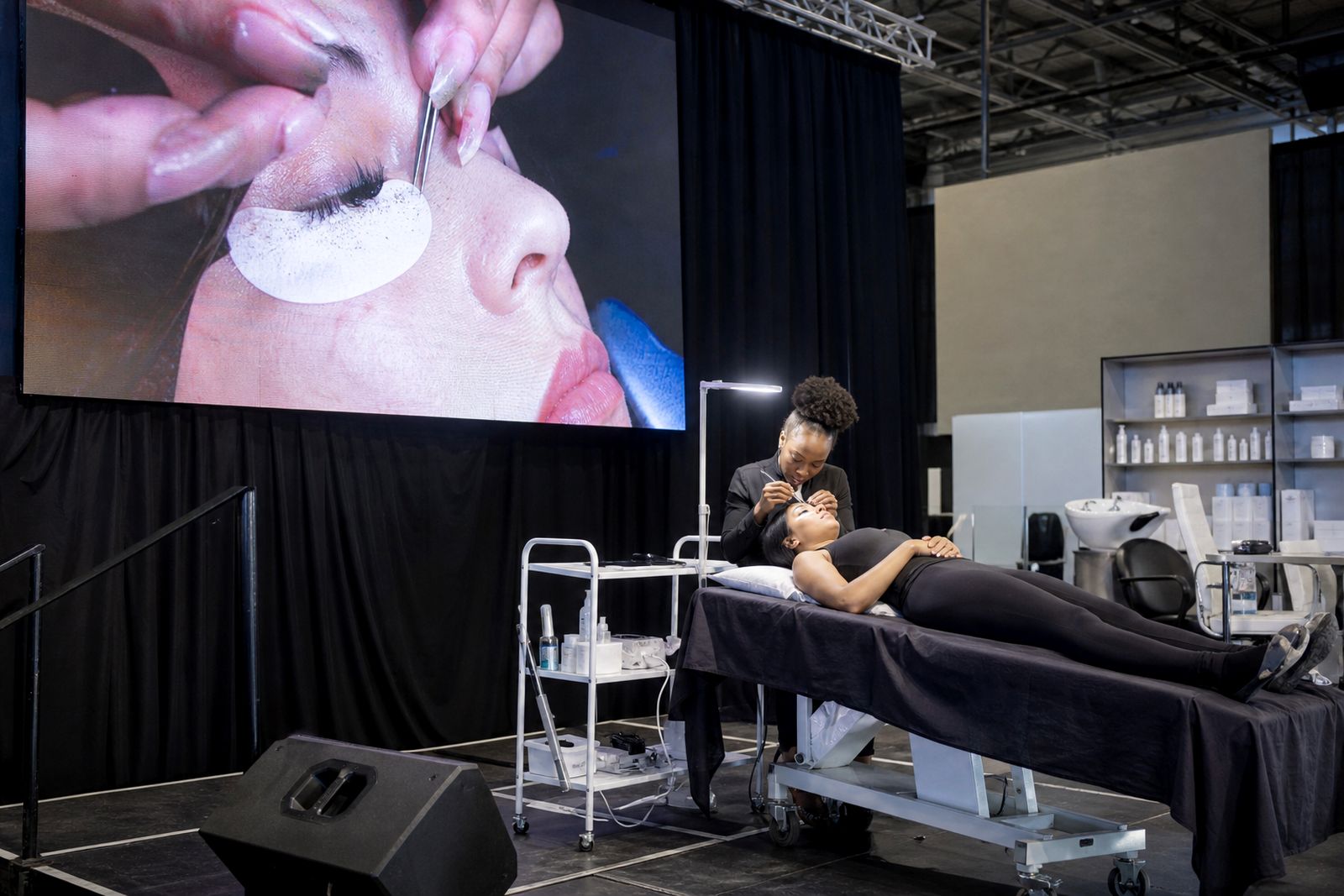
At a trade show, the value is not only the final before and after. It is the step-by-step thinking behind it. You can watch how the presenter reads the base level, checks previous colour, decides where warmth must stay and where lift is needed, and changes pace when the hair tells them something different. In a busy Gauteng salon, that kind of judgement is often what separates profitable colour work from re-do appointments.
For visitors, the best approach is to treat a stage demo like a practical class. Stand where you can see the sectioning line, listen for the reason behind each formula choice and make notes while the process is still fresh. A good ten minutes of focused watching can answer questions a brochure never will.
What to watch from the first consultation
The colour work starts before any bowl is mixed. A strong demo usually begins with a quick consultation, and this is where trade visitors should pay close attention. Even when time is short on stage, the presenter will normally show how to check the starting point, ask about old tint, home care habits and heat use, then explain what result is realistic in one service.
That conversation matters in South African salons where clients often arrive after sun exposure, hard water, braids, straightening or uneven home colour. If the consultation is rushed, the rest of the service can go wrong quite quickly.
- Notice how the presenter identifies natural level, porosity and visible banding.
- Watch whether scalp condition and hairline sensitivity are mentioned before application.
- Listen for realistic language about what can be achieved in one sitting.
- Check if the presenter explains maintenance, toning and root grow-out expectations.
- Look for signs that patch testing and general salon safety are treated as standard good practice.
If a demo skips the consultation completely, you are not seeing the full salon process. The technical work may still be useful, but it tells only half the story.
Sectioning, application and timing under pressure
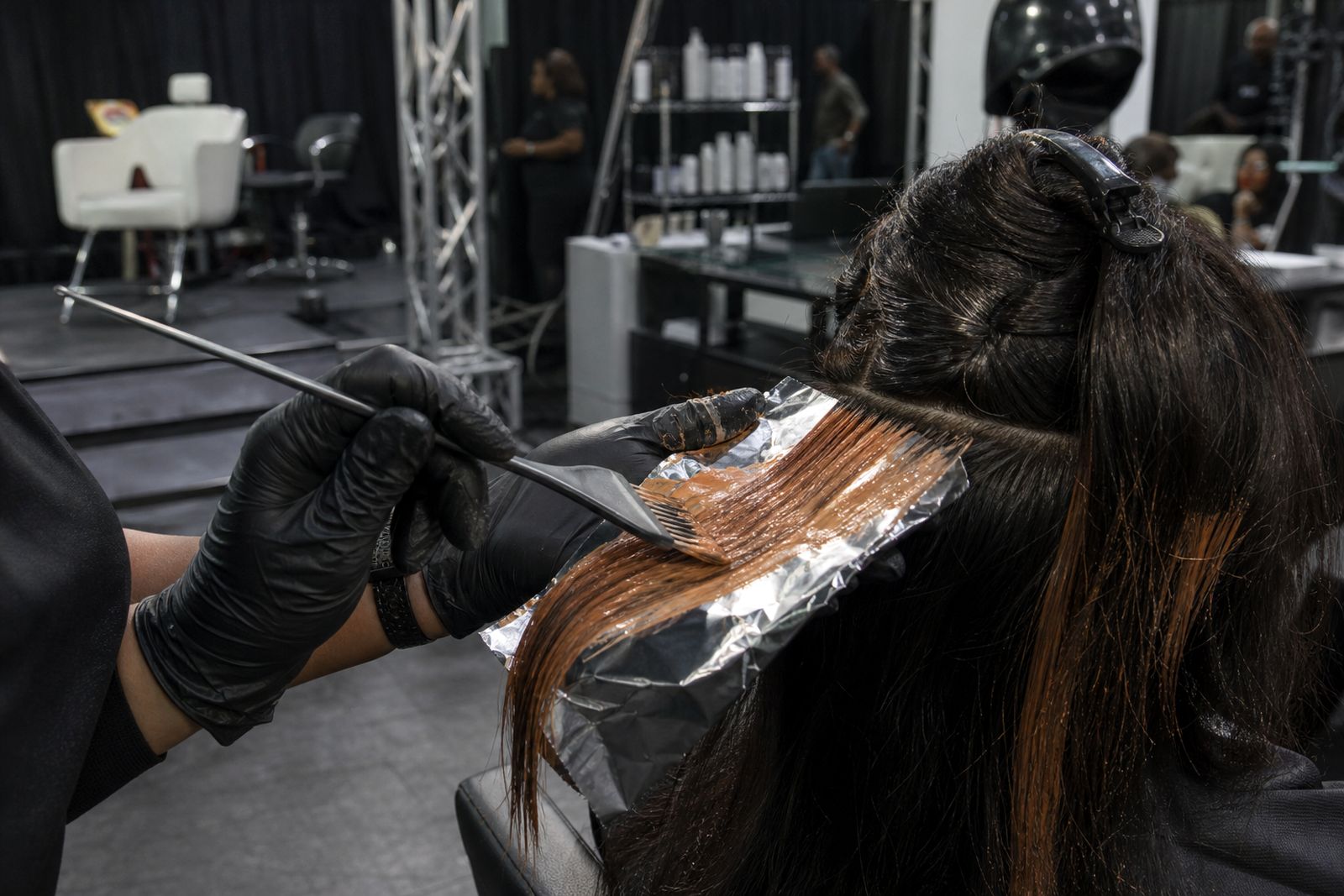
Once the model is prepped, the most useful part of a live colour demo is often the quiet mechanical work. Good sectioning keeps saturation even. Good application keeps the result predictable. Good timing keeps the service commercially sensible. These things are easy to miss in photos, but obvious when viewed a few metres away.
Watch the size of the sections and whether they match the target result. Fine woven pieces, broad slices, root shadow placement and face-frame brightness all need different control. Also watch the amount of product on the brush. Too little can leave patchiness. Too much can create swelling and transfer.
Timing is just as important. In a real salon, the operator is not working in isolation. There may be basins in use, other colour clients processing and a front-of-house team trying to keep appointments moving. A strong presenter will mention where they would speed up, where they would slow down and how they would check development rather than simply waiting for the clock.
- Are the section sizes consistent from one side to the other?
- Is the application neat around the hairline and nape?
- Does the presenter explain why one area is started before another?
- Are mid-lengths and ends treated differently where needed?
- Is processing checked visually instead of guessed?
That practical rhythm is what many salon teams come to learn, because it affects bookings, staffing and rework costs just as much as colour theory does.
A Gauteng workshop example from the salon floor
One useful example comes from a small workshop held for a Johannesburg salon team preparing for the year-end rush. The team had plenty of demand for brighter blonding services, but appointments were running long and results varied between operators. During the session, the trainer worked on a model with dark regrowth, warm mids and porous ends from previous lightening.
Instead of chasing a dramatic result in one step, the trainer broke the service into clear priorities. First came a short consultation about the model's routine, heat use and previous colour history. Then the team compared the texture at the crown, sides and front hairline to see where lift would happen faster. The trainer chose smaller sections around the face, heavier saturation through the resistant areas and a gentler plan for the ends. It looked slower at first, but it actually saved correction time later.
What helped the salon most was not the formula itself. It was the sequencing. The team could see why one zone was applied first, why another was feathered, and why toning could not be chosen before the lift had fully developed. By the end of the workshop the staff had changed their prep routine, improved sectioning discipline and agreed to allow extra consultation time for clients with overlapping colour history. Small changes, but they made the work more predictable.
Questions worth asking during or after the demo
Trade visitors sometimes spend a full demo taking photos and leave without asking the question that matters most for their own salon. Use the chance properly. Ask about the situations you actually deal with each week: regrowth overlap, grey blending, dull mids, banding, rushed appointments and clients who want a cooler result than their hair can comfortably hold.
Keep your questions practical. A good presenter should be able to explain not only what they did, but what they would change for another texture, another service time or another maintenance budget.
- How would this method change on very dense hair?
- What would you do if the mids are warmer than the root area?
- How do you price or time a service like this in a working salon?
- What aftercare advice do you give for fading and brassiness?
- When would you stop and rebook instead of pushing for more lift?
You do not need every answer on the day. One or two solid takeaways that improve bookings back at the salon are worth more than a long list of theory you never use.
How to turn a stage demo into better salon results
The biggest mistake after any live demo is trying to copy the whole look without adapting it to your own client base, timing and team skill level. Use the demo as a reference, then narrow it down to the parts that fit your floor. Maybe that is cleaner sectioning. Maybe it is stronger consultation wording. Maybe it is better planning for toning and rebooking.
Salon owners and team leads should compare notes straight after the session while details are still clear. Decide what can be trialled first and what needs more practice before it goes onto the price list. If your salon works in a high-turnover centre, speed may be the key lesson. If your salon books longer transformation services, correction planning may matter more. In either case, what you saw live needs a workable system behind it or it will be forgotten by Monday.
That is the real value of hair colour demos at a trade show. They give you a close view of technical choices under pressure, then let you take those lessons back to the salon and apply them in a way that suits your team. Not every trend belongs in every chair, but sound method nearly always does.
What our Beauty Trade Show customers say
Verified Google reviews
Questions we get asked
Are the hair colour demos suitable for salon owners who do not colour hair themselves?
Yes. Salon owners can learn a lot from watching consultation flow, timing, sectioning and how colour services affect staffing and booking lengths.
Will the demos cover corrective colour work?
Some presenters may touch on correction planning, banding or uneven lift, but the focus is usually on practical stage education rather than a full long-form class.
Can I contact BeautyShow about attending or planning my visit?
Yes. Please use the enquiry form on our contact page and we will point you to the most relevant visitor information.
Also worth a look
Book a stand or register to visit
Send a note through our contact form to ask about a stand, a stage demo slot or trade visitor entry, and our team will reply with the details.
Open the contact form